Friday 22 July 2011
Serpentine Gallery Pavilion, Kensington Gardens, London, W2
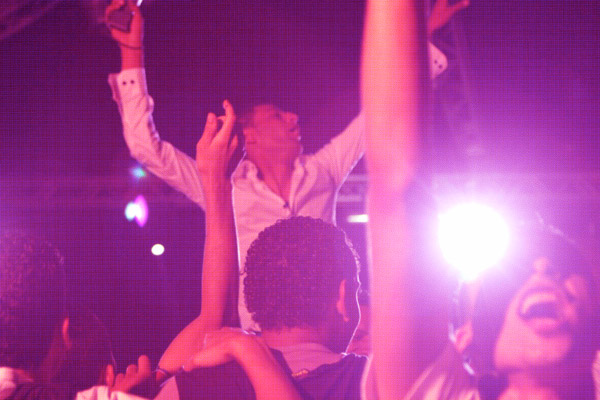
8pm Shaabi Party
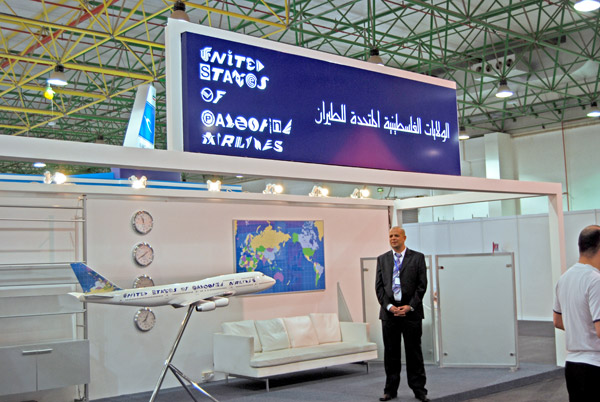
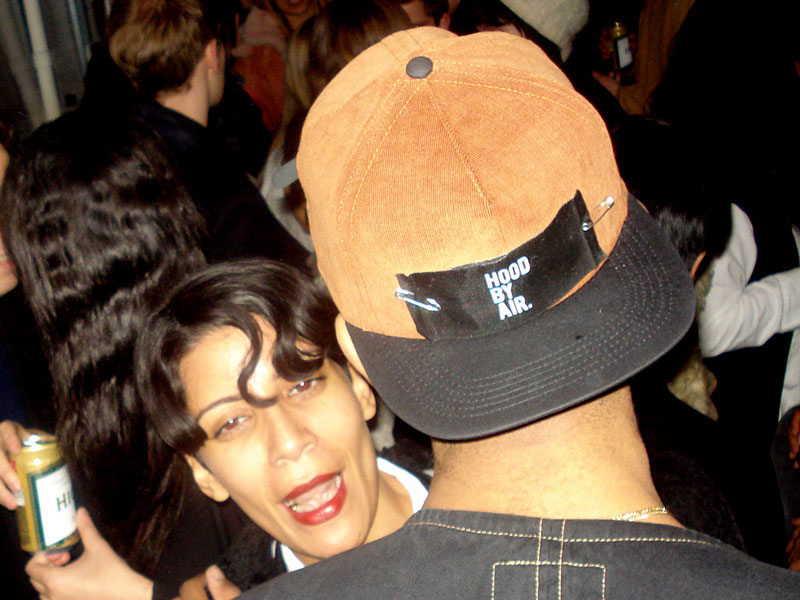
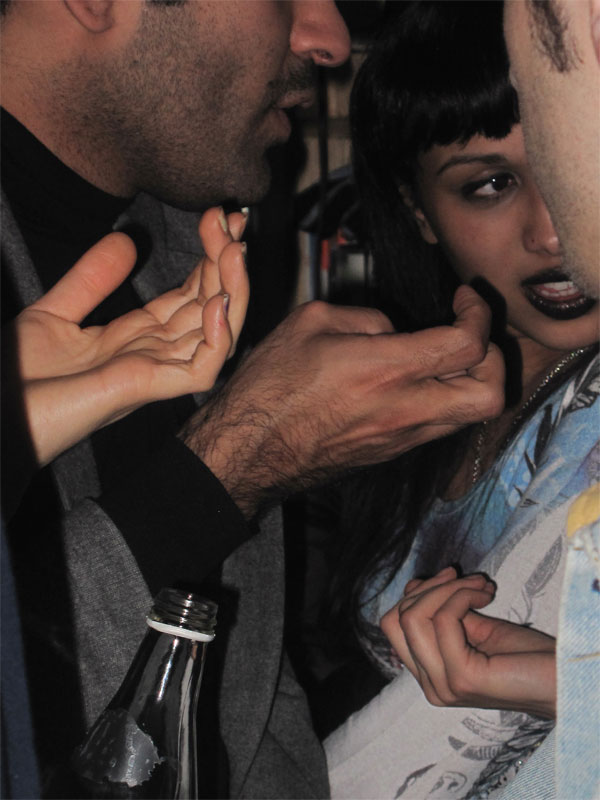
Image courtesy Sarah Carr
Featuring music by Sadat, Figo, and Amr 7a7a
Tickets £5/£4
Available from the Gallery Lobby Desk or Ticketweb.
The Shaabi-Music-Wedding-Dance-Party is part of the Bidoun Library Project, up at the Serpentine Gallery until September 17th.
Saturday 16 July
Serpentine Gallery
Sackler Centre of Arts Education, 3pm
Free
With an introduction by Bidoun contributing editor Shumon Basar, followed by Hisham Matar in conversation with Maya Jaggi
** Bidoun Library Saturday Seminars: Hisham Matar
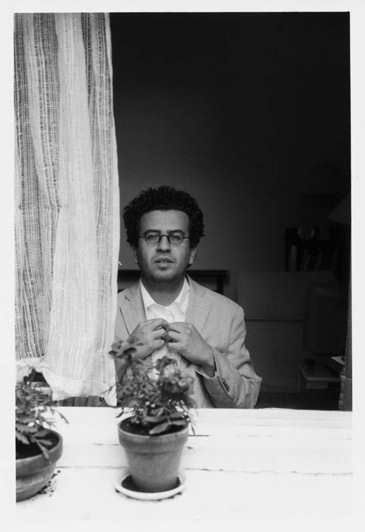
For the inaugural Bidoun Library Saturday Seminar author **Hisham Matar will be reading from his second novel, Anatomy of a Disappearance. This will be followed by an in-conversation with cultural journalist and critic Maya Jaggi. The event will be introduced by writer, editor and curator Shumon Basar Hisham Matar (born 1970) is a Libyan author. Born in New York City in 1970 to Libyan parents, Matar spent his childhood first in Tripoli and then in Cairo. He has lived in the UK since 1986. His debut novel In the Country of Men was shortlisted for the 2006 Man Booker Prize and won the 2007 Royal Society of Literature Ondaatje Prize. Matar’s essays have appeared in Asharq Alawsat, The Independent, The Guardian, The Times and The New York Times.
The Bidoun Library Project is up at the Serpentine from 12 July - 17 September. Click here for more information on Saturday Seminars.
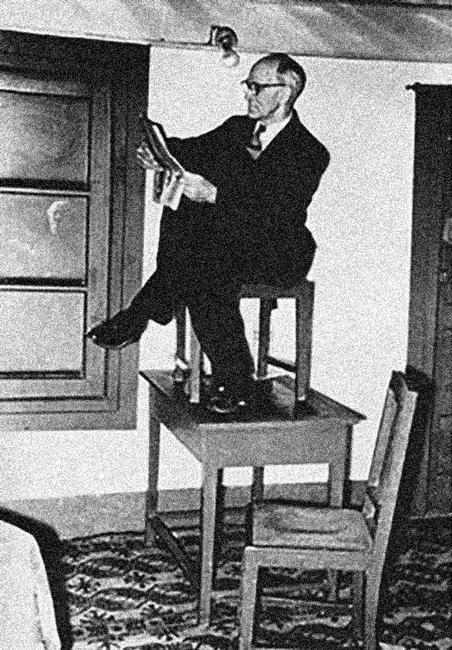
Literacy expert, Dr. Frank Laubach, works late into the night on Afghan reading primers (March 1951). Here, he sits on a table to make the most of the lone lightbulb in his dim hotel room.
This summer, the Bidoun Library will be in residence at the Serpentine Gallery with a program of exhibitions, talks, screenings and an Egyptian shaabi wedding/dance party. Founded in 2009, the Bidoun Library is a peripatetic resource of books, periodicals and ephemera developed by Bidoun Projects, a not-for-profit publishing, curatorial and educational initiative dedicated to supporting contemporary culture from the Middle East.
In London, amid library closings and deaccessionings that have let thousands of publications loose upon the market, the Bidoun Library will address that crisis, as well as the printed aftermatter of the Egyptian revolution that began in earnest on January 25, 2011.
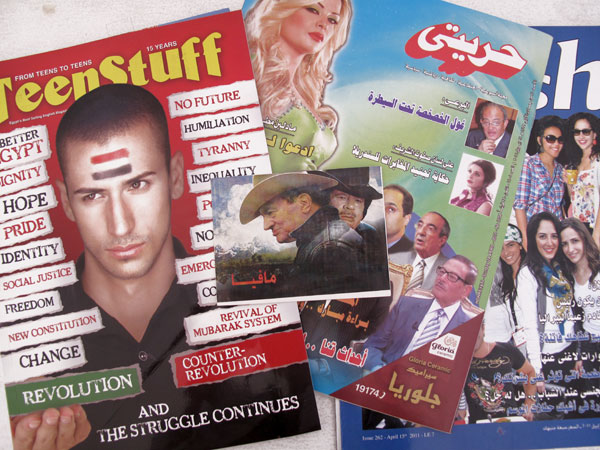
Months of research, purchasing and hoarding have amassed a collection of (nearly) every book printed and every newspaper and periodical founded since the revolution began — from soap-operatic novellas about Hosni Mubarak’s last days in power, to special revolution issues of teen, fitness, and in-flight magazines, as well as previously-banned political treatises. This material, along with publications obtained in London during Bidoun’s residency at the Centre for Possible Studies on Edgware Road, will be placed amongst the Library’s eclectic catalogue of guidebooks, political treatises, romance novels, comic books, travelogues, and oil company publications — a veritable cornucopia of representation.
Bidoun 25 — the issue that will launch at the Serpentine this summer — also considers the revolution in Egypt (and the volume of words it occasioned, in print and online), in what may well be the most information-dense Bidoun ever in history.
During July and August, Bidoun will host a series of events bringing together leading writers and artists:
Saturday, July 16
Hisham Matar
Sackler Centre of Arts Education, 3pm
Author of In the Country of Men and Anatomy of a Disappearance, Hisham Matar was born in New York City in 1970 to Libyan parents, Matar spent his childhood first in Tripoli and then in Cairo. He has lived in the UK since 1986.
Monday, July 18
Rania Stephan: The Three Disappearances of Suad Hosni
The Gate Cinema, Notting Hill, 7pm
Former Edgware Road Project artist-in-residence Rania Stephan returns to present the UK premiere of her film The Three Disappearances of Suad Hosni (2011), which recently won the Sharjah Biennial Prize. The film’s non-fiction narrative reflects on the life and death of Egyptian actress Suad Hosni, who committed suicide while living on Edgware Road in 2001.
Bidoun Projects present an evening of loud Egyptian Shaabi music, dancing, readings, and an actual wedding, all at the Serpentine Gallery Pavilion 2011. This event is commissioned by the Serpentine Gallery as part of the Edgware Road Project.
Saturday, July 23
Nawal Al Saadawi
Sackler Centre of Arts Education, 3pm
Author of over forty-seven books, Nawal Al Saadawi is a pioneering Egyptian activist, psychiatrist, feminist, and political activist. Her books include_ Women and Sex, _Memoirs from the Women’s Prison, and God Dies by the Nile. Saadawi’s life in struggle has seen her incarcerated in the 1970s for speaking out against the corruption of the Sadat regime, forced by Islamists to flee Egypt for eight years in the 1990s. She was among the protesters in Tahrir Square in 2011.
Saturday, July 30
Samandal: Picture Stories From Here and There
Sackler Centre of Arts Education, 3pm
Samandal is a Beirut-based trilingual magazine dedicated to comics, cartoons, and other picture stories. The goal of Samandal is to provide a platform on which graphic artists from Lebanon, the Middle East, and the world may experiment with various combinations of word and image for the benefit of a polyglot international audience… that loves comics.
Saturday, August 6
Slavs and Tatars: Molla Nasreddin, The Magazine That Woud’ve, Could’ve, Should’ve
Sackler Centre of Arts Education, 3pm
Artist collective Slavs and Tatars present Molla Nasreddin: The Magazine that Would’ve, Could’ve, Should’ve, a new book examining the history of that legendary Azeribaijani periodical, arguably the most important Muslim satirical political magazine of the 20th century. For the book’s UK launch, Slavs and Tatars will present Molla Nasreddin: Embrace Your Antithesis, including: a discussion of the book’s historical context; a case study of the complex Caucasus region; and an exploration of the issue of self-censorship, then and now. Guests will be offered their choice of red or white tea, alluding to Communism and Islam, the two major geopolitical narratives between which Molla Nasreddin — and Slavs and Tatars — navigate.
Saturday, August 13
Michael C. Vazquez : The Periodical Cold War: Tales from the Bidoun Library
Sackler Centre of Arts Education, 3pm
In the 1960s, an array of state-sponsored international magazines fought pitched battles — against imperialism or communism and/or their own governments — across the entire length of the first, second, and third worlds. Bidoun Senior Editor and librarian Michael C. Vazquez presents an illustrated lecture on pivotal moments in periodical diplomacy, with especial focus on Transition (Kampala, Uganda), Tricontinental (Havana, Cuba), and Lotus: Afro-Asian Writing (Cairo / Beirut / Tunis).
Saturday, August 20
Ahdaf Soueif
Sackler Centre of Arts Education, 3pm
Based in London and Cairo, Ahdaf Soueif is a critic, activist, translator, and novelist whose works include In the Eye of the Sun, Mezzaterra: Fragments from the Common Ground and_ The Map of Love_. Winner of the 2010 Mahmoud Darwish Award for her work on Palestine, Soueif comes from a family of activists and writers who have been some of the key protagonists of the Egyptian revolution. In this seminar on writing and the revolution, Soueif will be discussing her work and sharing her experiences of activism and authorship over the past two decades.
Saturday, August 27
UK Libraries: Struggles for the Knowledge Commons
Sackler Centre of Arts Education, 3pm
A panel of leading activists reflect on the current struggles around the closing of public libraries in the UK.
Saturday, September 3
Sonallah Ibrahim
Sackler Centre of Arts Education, 3pm
In 2003, Sonallah Ibrahim — the author of_ Zaat, Stealth, The Smell of It, and The Committee_, among other books — publicly refused a prestigious literary award given to him by the Egyptian ministry of culture. It was only the latest inspiring outrage from this novelist and writer, who’d been imprisoned for five years under the Nasser regime for his leftist politics. Ibrahim remains an outspoken critic and force of legend in Egypt.
Centre for Possible Studies
64 Seymour Street
London W1H 5BW
In conjunction with our residency at the Centre for Possible Studies, the Bidoun Library will present a program of two films drawn from our collaboration with the online archive UbuWeb.
The program will be introduced by Masoud Golsorkhi, editor of Tank magazine.
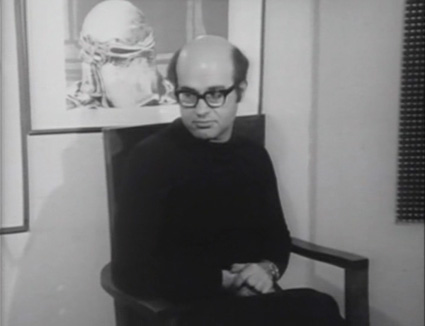
Bahman Maghsoudlou Ardeshir Mohasses & His Caricatures ,1972
20 min
A short documentary about Ardeshir Mohasses (1938-2008) featuring rare footage of the Iranian artist in his studio in Iran before his self-exile in New York which was to last over thirty years. Mohasses’ anti-shah and anti-Islamic Republic cartoons used settings and costumes of the Qajar dynasty of 1794 to 1925 — a misdirection that fooled nobody. The film features commentary from Iranian intellectuals of the time including Houshang Taheri, Javad Mojabi, and Fereidoun Gilani whereas Mohasses, a man of few words, is noticeably mute throughout.
Kamran Shirdel The Night It Rained ,1967
35min
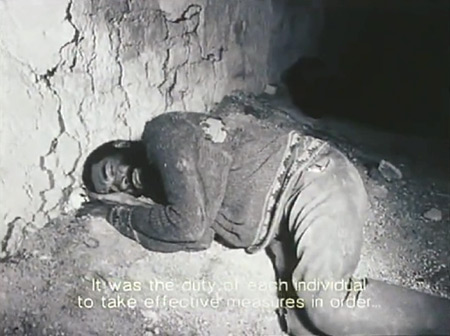
In northern Iran, a schoolboy from a village near Gorgan is said to have discovered that the railway had been undermined and washed away by a flood. As the story goes, when he saw the approaching train, he set fire to his jacket, ran towards the train and averted a serious and fatal accident. Kamran Shirdel’s film The Night it Rained does not concentrate on the heroic deed promulgated in the newspapers, but on a caricature of social and subtle political behavior — the way in which witnesses and officials manage to insert themselves into the research into this event. Shirdel uses newspaper articles and interviews with railway employees, the governor, the chief of police, the village teacher and pupils — each of whom tell a different version of the event. In the end, they all contradict each other, while the group of possible or self-appointed heroes constantly grows. With his cinematic sleights of hand, Shirdel paints a bittersweet picture of Iranian Society in which truth, rumor, and lie can no longer be distinguished.
Upon completion the film was banned and confiscated, and Shirdel was finally expelled from the Ministry. It was released seven years later in 1974 to participate in the Third Tehran International Film Festival, where it won the GRAND PRIX by a unanimous vote, only to be banned again until after the revolution.
May 22 - August 14, 2011
Opening Reception: Sunday, May 22, 4-6 pm The Big One: Live music performance by Hassan Khan, May 22, 5:15pm
Queens Museum of Art
On the occasion of the opening of his video installation The Hidden Location (May 22, 4:30pm), Bidoun contributing editor Hassan Khan will perform his music set The Big One (2009), a 45 minute piece made up of oscillating juxtapositions of heavy synth-based New Wave Shaabi music with delicately wrought tonal compositions. The exhibition is curated by Queens Museum of Art Van Lier Fund Fellow — and fellow Bidoun contributing editor — Sohrab Mohebbi.
In addition, on May 20, 7-9 pm , after a screening of selected single channel videos, the artist will discuss the work on view at e-flux, 41 Essex St, New York.
Piero Paolo Pasolini Seeking Locations in Palestine for the Film “The Gospel According to Matthew” (Sopralluoghi in Palestina per il film “Il Vangelo secondo Matteo
Seeking Locations in Palestine for the Film "The Gospel According to Matthew” (Sopralluoghi in Palestina per il film “Il Vangelo secondo Matteo”)
Pier Paolo Pasolini.
1963
52 min
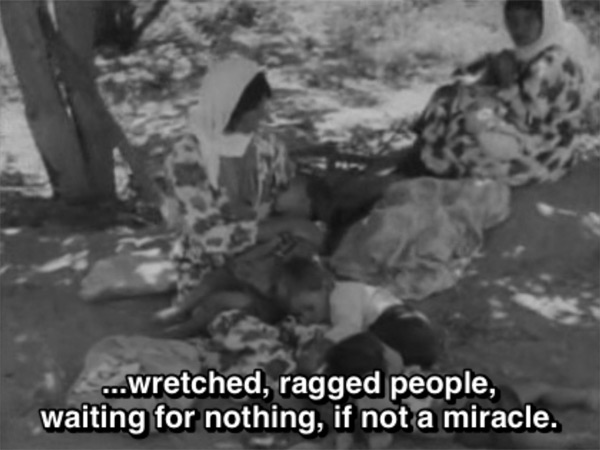
In 1963, accompanied by a newsreel photographer and a Catholic priest, Piero Paolo Pasolini traveled to Palestine to investigate the possibility of filming his biblical epic The Gospel According to Matthew in its approximate historical locations. Edited by The Gospel’s producer for potential funders and distributors, Seeking Locations in Palestine features semi-improvised commentary from Pasolini as its only soundtrack. As we travel from village to village, we listen to Pasolini’s idiosyncratic musings on the teachings of Christ and witness his increasing disappointment with the people and landscapes he sees before him. Israel, he laments, is much too modern. The Palestinians, much too wretched; it would be impossible to believe the teachings of Jesus had reached these faces. The Gospel According to Matthew was ultimately filmed in Southern Italy. Mel Gibson would use some of the same locations forty years later for_ The Passion of the Christ_.
Amsterdam Art/Book Fair
14 & 15 May 2011
Bidoun presentation Sunday May 15 at 2pm
Bidoun at the Amsterdam Art Book Fair
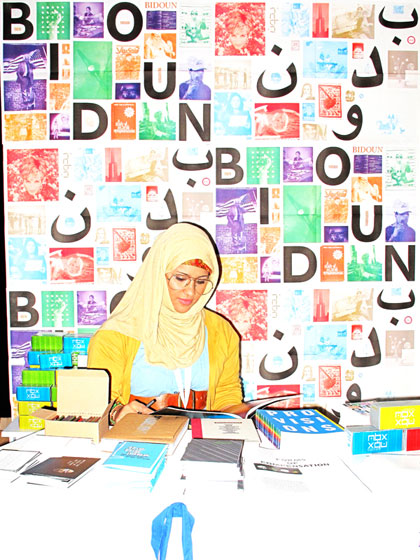
Bidoun will be on display this weekend as part of Shashin Art Bookshop’s table in addition to a presentation by Tiffany Malakooti on the Bidoun Library and BubuWeb projects.
Bidoun and UbuWeb are pleased to present four of Shirdel’s most renowned socio-political documentaries, films that courageously and frankly revealed the darker side of Iran’s economic boom, analyzing the effects of a society flush with oil money. These films were steeped in a deep social consciousness reminiscent of the best of the Italian Neo-realist tradition, the cinema that had influenced him deeply during his studies in Italy. Shirdel’s furious documentaries and cinematic language were a bone of contention both under the Shah and following his exile, because they spoke up for the underprivileged and, in doing so, exposed and criticized the corruption of the mechanism of power. Because of the severe censorship, nearly all his films were banned and confiscated, and in the end he was expelled from The Ministry and put on the blacklist. Seven years after it was made (and censored), his The Epic of the Gorgani Village Boy (The Night It Rained!), after receiving the GRAN PRIX at The Third Tehran International Film Festival (1974), was immediately banned again and remained so (like his Nedamatgah (Women’s Prison, 1965), Qaleh (Women’s Quarter, 1966), Tehran Is the Capital of Iran (1966), and others) until after the revolution. Visit Kamran Shirdel on UbuWeb
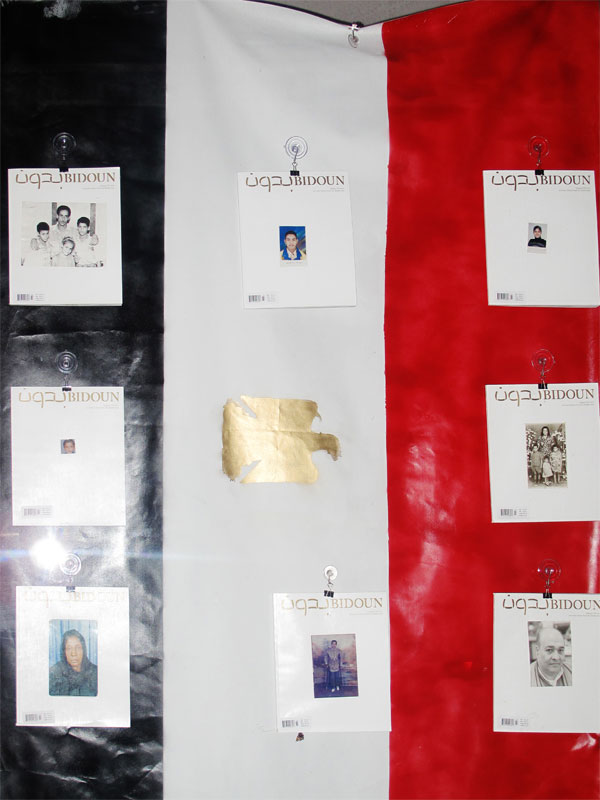
The Bidoun Library is seeking manifestations of the Revolution of January 25th in magazines, newspapers, books, and miscellaneous printed matter. We do not seek a complete and democratic collection of everything printed just ahead, during and after the 25th, nor of the best, most insightful, or lucid accounts in print, but printed materials which are more than anything else OBJECTS, necessitated, transformed or intervened upon by the continuing revolution.
In our experience, this approach tends to produce two types of documents: first, there are materials which are produced to meet new needs or markets among the public, or by new channels of distribution and socialization opened by an event. In general these are materials that would not have existed before these events and may not exist after. This could include newspapers and leaflets produced in, during, and for the demonstrators in Tahrir, for example, or hastily produced commemorative magazine issues or books produced directly after.
Another prime site of the material manifestation of an event often appears in the ways it is refracted in existing modes of cultural production. For example the way the revolution appears in teen and celebrity magazines, advertisements, sports papers, occult and conspiratorial pamphlets, romance novels, comic books, children’s books, auto decals and stickers, trade journals, pop-political analysis, hastily produced biographies of presidential hopefuls, yellow pages, real estate and travel guides, and so on.
The Bidoun Library is a peripatetic collection of printed materials from and about the ‘Middle East,’ as a product and producer of printed materials. It has traveled extensively throughout the region, from Abu Dhabi to Beirut to Cairo. This summer the Library will spend several months at the Serpentine Gallery in London. All materials donated to the library will be credited and all purchases on its behalf compensated, by arrangement with its librarians. Upon request, Bidoun will return materials after documentation.
Email info@bidoun.org with queries. Though this is an ongoing project, any materials sent to us by the first week of May would be helpful as potential inclusions in the summer issue of Bidoun. Materials could be dropped off at the Townhouse Gallery in Cairo, 1st floor.
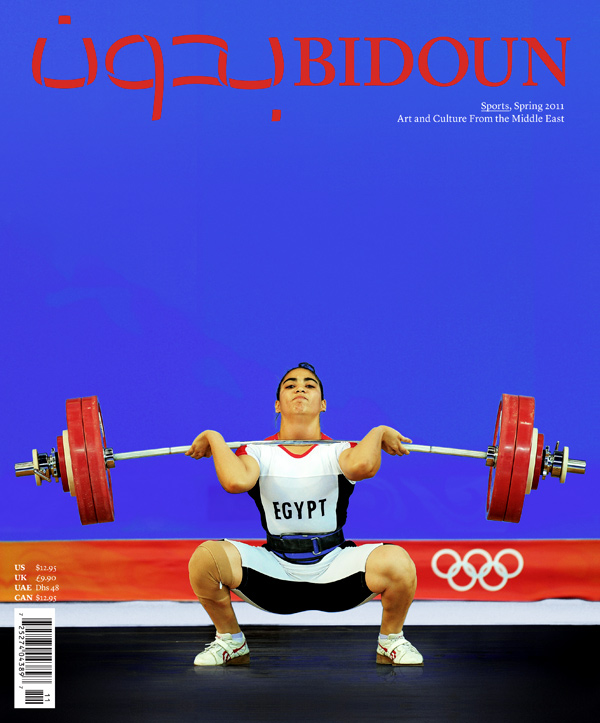
In honor of the SPORTS issue and our feature on Iranian dancercise king Mohammad Khordadian, Bidoun presents a compilation of some of our favorite early ‘90s Tehrangelesi pop songs that soundtrack Khordadian’s videos, including:
Martik — Niloofar
Fataneh — Namehraboon
Moein & Faezeh — Del Shekasteh
Bijan Mortazavi — Havaye Eshgh
Black Cats — Rhythm of Love
Moein — Tamana
Hassan Shamaizadeh — Ye Dokhtar Daram
Siavash — Gol
Fataneh — Mola Mamadjan
Bijan Mortazavi — Zendegi
Samad — Hele Dan
Shahram Shabpareh — Shabe Toye Raaheh
Jalal Hemmati — Baba Karam
Click here to download!
the true tale of the Naga Jolokia, the world’s hottest chili). We were more interested in the apparatus of celebrity and fandom; in the body as commodity; in the mind games and energy drinks and exercise tapes.
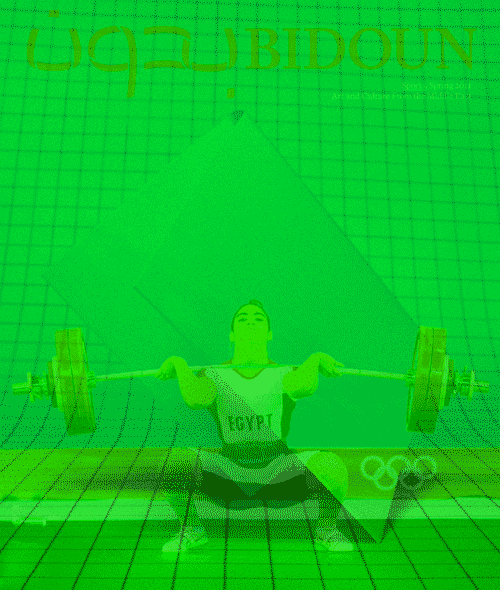
And so we set out to find the most improbably compelling figures in the wide world of sports. Like Mohammad Khordadian, the elusive, effusive god-king of Persian dancercise, whose thirty-year career spans Tehran and Tehrangeles and Dubai. Like Omar Sharif, smoldering star of stage and screen and roving ambassador for the not-yet-Olympic sport of Bridge. Like Nada Zeidan — archeress, spokesmodel, and road-racer by day, emergency room nurse by night. Like Shah Rukh Khan, the Muslim face of Bollywood cinema and owner of his own cricket team, the Kolkata Knight Riders. Like Stephen Cherono and other Kenyan long- and middle-distance runners who have found infamy and fortune as Arabized athletes in the Gulf.
Other features consider avian sports medicine, intramural three-legged racing, competitive Magic: The Gathering, and transcripts from Iranian state television’s #1 sports show.
In the arts section: Neil Beloufa ’s ghosts of futures past, Alvaro Perdice s’ ruined Algerian museums, and Mathieu Kleyebe Abonnenc’s tricontinental revolutionary séance.
Revews: Nicky Nodjoumi // Karthik Pandian // Mathaf: Arab Museum of Modern Art // Pouran Jinchi // Decolonizing Architecture // Walid Raad // Mounira Al Solh // Wael Shawky.
Plus: Sohrab Mohebbi’s letter from an Iranian soccer pitch, Dave Tompkin’s encounter with electronic music pioneer Hashim , and red velvet cake with Yemeni-American boxer Saddam Ali.
Bidoun Projects returns for its fourth year as a project partner of Art Dubai. Our 2011 programming is built around the theme of Sports: competition, stardom, the parody of sports as labor or labor as sports, the art of losing, and sports per se. Our projects include the Art Park, an underground project space for film, video and talks, that features retrospectives of two pivotal Egyptian artists, Sherif El Azma and Wael Shawky, curated by Bidoun’s Kaelen Wilson-Goldie and Sarah Rifky of the Townhouse Gallery, respectively, as well as a sports-themed video programme featuring a variety of artists including Ziad Antar, Mahmoud Hojeij, Van Leo, and Marwa and Mirene Arsenios. The Bidoun Library returns, too, featuring ‘The Natural Order,’ a new section specially curated for the fair that focuses on printed material on the Gulf from the past five decades. ‘The Natural Order’ will include corporate and state publications, as well as magazines and lay-ethnography on the Gulf published in the mid 20th century, when the region was mostly unfamiliar in the West and was becoming a source of great interest with the discovery of oil. The collective Slavs and Tatars will also make a special appearance with a new project and publication dedicated to Molla Nasreddin. Join us at the fair on March 15th at 5 pm for a special Bidoun Show & Tell in the Art Park and on March 16th as we co-host, with The Third Line, the Sharjah Biennial After Party! Bidoun Projects thanks the Emirates Foundation for its support in making these initiatives possible.
Bidoun is saddened to hear that the young Cairo based artist Ahmed Basiony was killed in the Egyptian protests last Friday.
To all of Bidoun’s many friends in Egypt, we salute you in your battle for justice.
With respect,
Bidoun
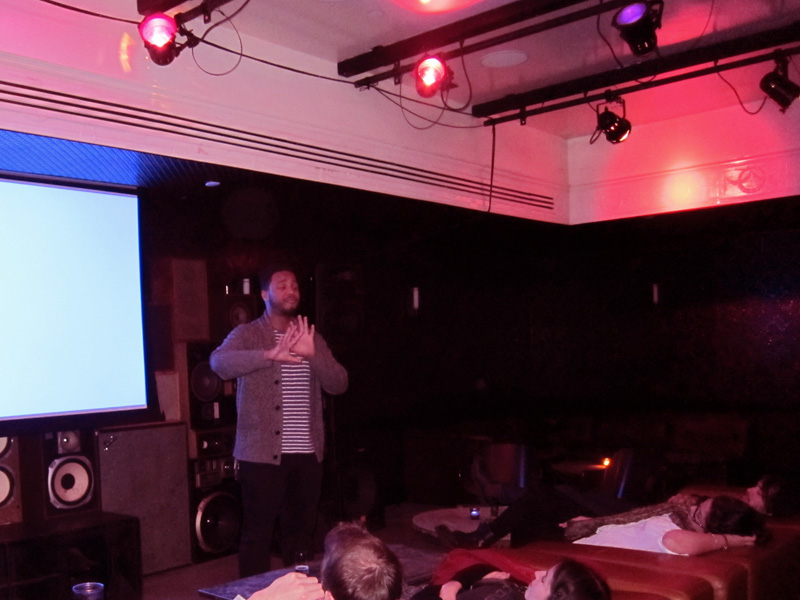
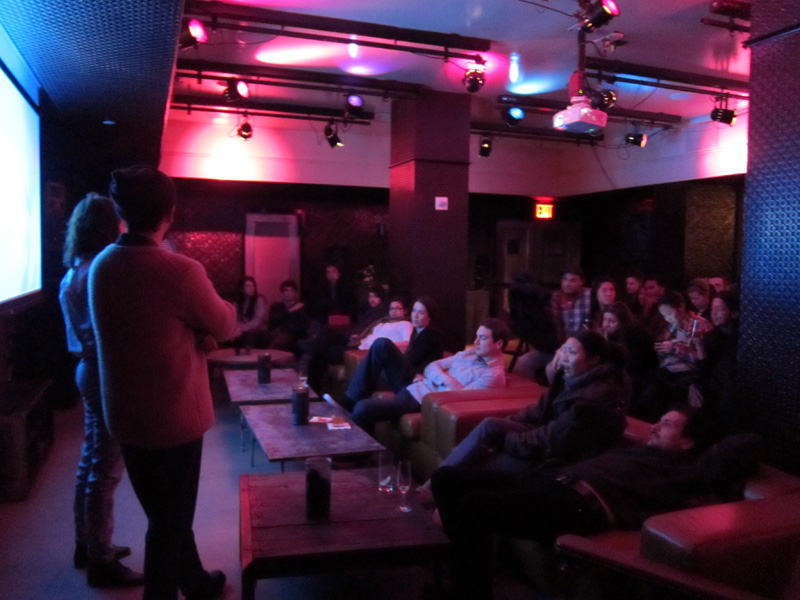
This past Sunday Bidoun screened a special hour-long montage for BLVCK AMERICA’S inaugural BLVCK EYE film night at the Ace Hotel in New York. Responding to popular demand, we’ve uploaded it for all to see along with some photos of the screening.
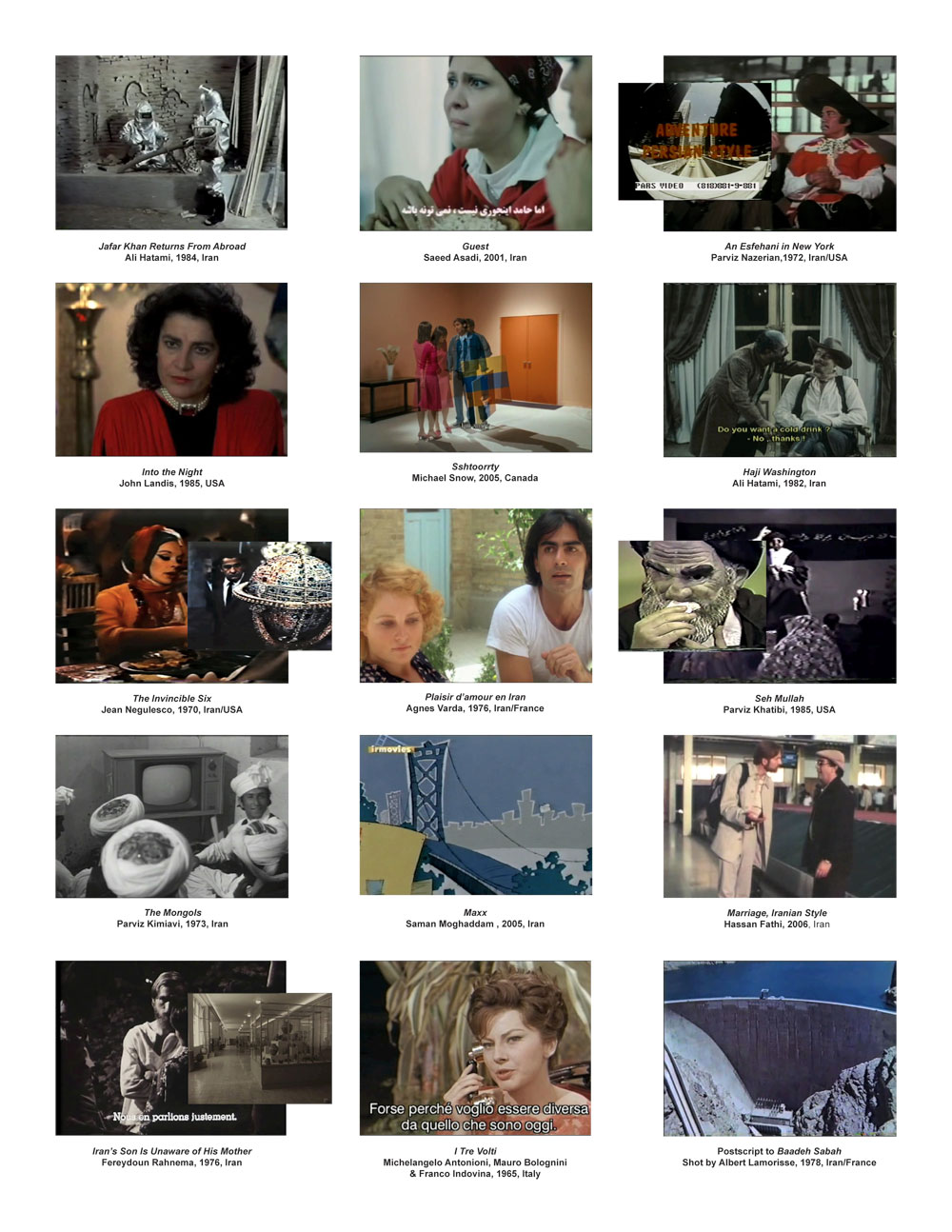
The montage is comprised of shorts and clips from materials which in some manner depict a relationship between Iran and the rest of the world: Farsi in American films, English in Iranian films, French directors commissioned to make films in Iran — even Princess Soraya Bakhtiari’s acting debut in a throwaway Antonioni film. Click here to see a guide to source films.
<!–more–> BLVCK AMERICA’s Saheer Umar
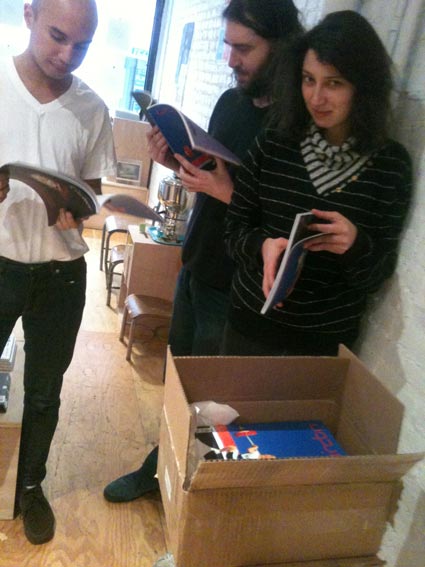
BLVCK AMERICA’s Saheer Umar introduces the BLVCK EYE series Team Bidoun (Lisa Farjam and child, Babak Radboy, and Tiffany Malakooti)
Team Bidoun (Lisa Farjam and child, Babak Radboy, and Tiffany Malakooti) on deck Bidoun Screening
Bidoun_BLVCKEYE_03
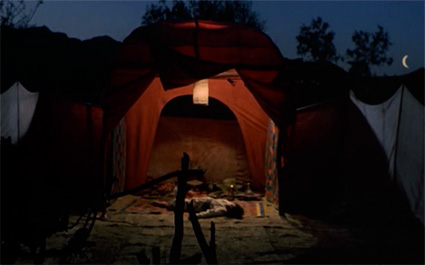
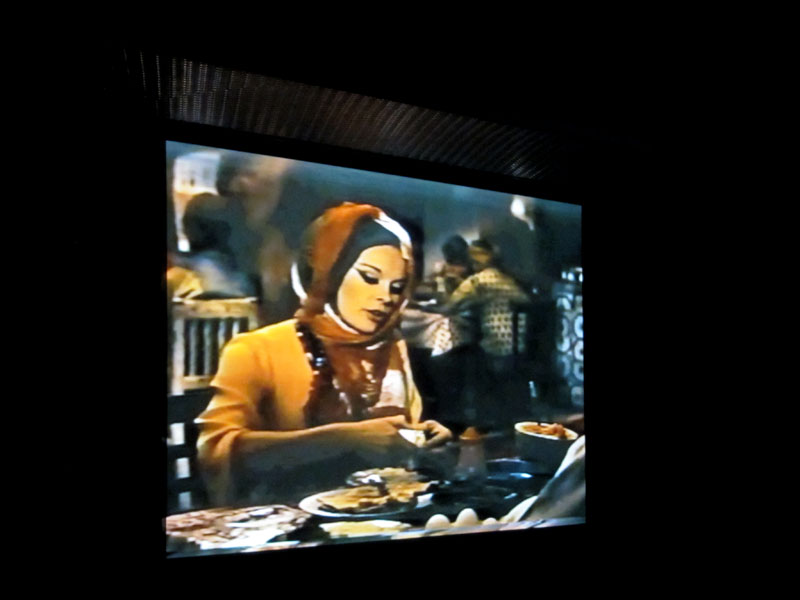
A scene from The Invincible Six directed by Jean Negulesco. Shot entirely in Iran, the film features Elke Sommer (seen here as a village vixen) along with some marginal Hollywood figures but also includes Iranian cast members (Behrouz Vossoughi) and production team (Fereydoun Hoveyda is credited as a “consultant” and Masoud Kimiai as “assistant director”).